Are Dog Bones Safe? What Every Dog Owner in Malaysia Should Know
Are Dog Bones Safe? What Every Dog Owner in Malaysia Should Know
Are dog bones safe for dogs? Many owners give dog bones as chew treats, believing they help clean teeth and keep dogs entertained.
However, veterinarians warn that some dog bones can cause choking, broken teeth, digestive blockages, and internal injuries. The safety of dog bones depends on the type of bone and how it is given.
If you are considering giving your dog bones in Malaysia, here is what every dog owner should know before making that decision.
Quick Answer: Are Dog Bones Safe?
Some dog bones can be safe when given carefully and under supervision. However, certain dog bones carry significant risks and may cause dental injuries, choking, or digestive blockages.
Veterinarians generally advise avoiding cooked dog bones and monitoring dogs closely when giving any chew item.
Are Dog Bones Safe for Dogs?
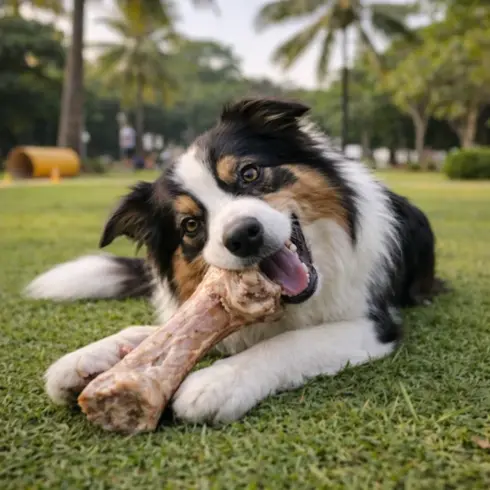
Dog bones are not automatically dangerous, but they are not completely risk free either.
According to the United States Food and Drug Administration, dog bones have been linked to several serious injuries in dogs. These incidents often happen when dogs swallow bone fragments or chew bones that splinter.
Common injuries linked to dog bones include:
- Broken teeth
- Mouth and tongue injuries
- Choking
- Intestinal blockage
- Vomiting and diarrhoea
- Rectal bleeding
- Emergency surgery in severe cases
The American Veterinary Medical Association also reports that hard chew items such as dog bones are a leading cause of dental fractures in dogs.
Because of these risks, dog bones should only be given carefully and under supervision.
Types of Dog Bones and Chews
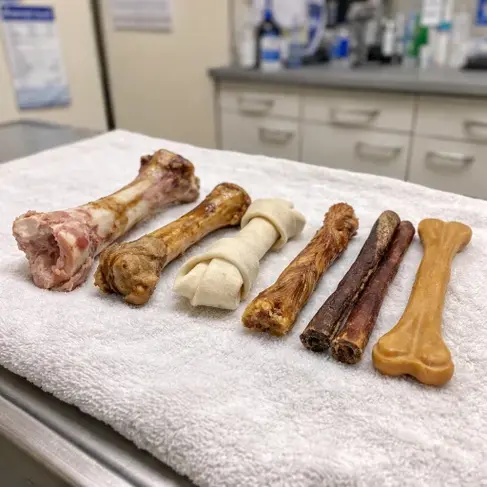
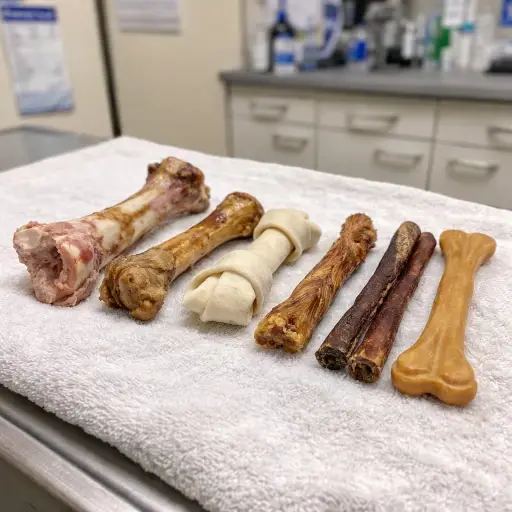
Dog owners often use the term dog bones to refer to several different types of chew treats. Each type has different risks and safety considerations.
Understanding how each type behaves during chewing helps dog owners make safer choices.
Rawhide Dog Bones

Rawhide dog bones are made from the inner layer of cow or horse hides. These hides are cleaned, processed, dried, and shaped into chew treats.
Rawhide dog bones are widely sold in pet stores but they come with several risks.
Potential problems include:
- Swelling in the stomach if swallowed
- Choking hazards from large pieces
- Digestive obstruction
- Possible chemical residues from processing
Veterinary studies show that gastrointestinal foreign body obstruction is one of the most common emergency surgeries performed in dogs. Many cases occur after dogs swallow indigestible objects.
Because of these risks, some veterinarians recommend limiting or avoiding rawhide dog bones.
Natural Dog Bones
Natural dog bones come from animals such as beef, lamb, or poultry. These dog bones may be given raw or cooked, and the safety of each type differs significantly.
Cooked Dog Bones
Cooked dog bones are widely considered unsafe for dogs.
Cooking causes bones to become brittle. Brittle bones may splinter into sharp fragments that can injure a dog internally.
Splintered dog bones can:
- Pierce the throat
- Damage the stomach lining
- Cause intestinal perforation
Veterinarians generally advise never feeding cooked dog bones to dogs.
According to reports referenced by the FDA, nearly 70 dogs became sick after eating packaged bone treats and at least 15 dogs died.
Raw Dog Bones
Raw dog bones are sometimes promoted as a safer option because they are less brittle than cooked bones.
However, raw dog bones still carry risks.
Possible concerns include:
- Bacterial contamination such as Salmonella
- Tooth fractures from very hard bones
- Intestinal blockage if bone fragments are swallowed
Research published in the Journal of the American Veterinary Medical Association found that chewing hard objects such as bones contributes to dental fractures in dogs.
Malaysian veterinarians report similar risks when dogs chew extremely hard bones.
Dehydrated Chews as an Alternative to Dog Bones
Many pet professionals now recommend dehydrated chews as an alternative to dog bones.
Dehydrated chews are made by slowly drying animal parts rather than cooking them. This process helps preserve texture while reducing the splintering risks often associated with traditional dog bones.
Examples of dehydrated chews include:
- Beef pizzle also known as bully sticks
- Goat pizzle
- Beef tendon
- Beef trachea
- Dehydrated fish skin
- Lamb ears
These chews allow dogs to satisfy their natural chewing instincts while often being easier to digest than many dog bones.
Chewing also supports mental stimulation. Structured activities such as supervised play, enrichment toys, or professional dog daycare services can provide healthy outlets for dogs with strong chewing instincts.
Even with dehydrated chews, supervision remains important. Chews should be removed once they become small enough to swallow.
What Kind of Dog Bones Are Considered Safer?
Some owners still choose to give dog bones despite the risks. In those cases veterinarians recommend several precautions.
Safer practices include:
- Choosing dog bones that are too large to swallow
- Avoiding extremely hard weight bearing bones
- Supervising dogs during chewing sessions
- Removing dog bones once they become small or splintered
Even when these precautions are followed, dog bones still carry some level of risk.
What Do Vets Recommend Instead of Dog Bones?

Because dog bones can cause dental injuries or digestive problems, veterinarians often recommend safer chew alternatives.
These include:
- Veterinary approved dental chews
- Durable rubber chew toys
- Nylon chew toys designed for dogs
- Interactive enrichment toys
- Supervised dehydrated chews such as pizzle or tendon
The American Veterinary Dental College advises avoiding chew items that are harder than a dog's teeth because these items increase the risk of dental fractures.
How Common Are Injuries Related to Dog Bones?
Although detailed Malaysian statistics are limited, international veterinary data provides insight into injuries linked to dog bones.
The American College of Veterinary Surgeons reports that gastrointestinal obstruction is among the most common emergency procedures performed in dogs.
Dental injuries are also common. The American Veterinary Dental College estimates that many dental fractures occur when dogs chew hard objects such as dog bones.
These findings highlight why dog bones should always be given carefully and under supervision.
Dog Bones and Malaysia's Climate
Malaysia's warm and humid climate can increase certain risks associated with raw dog bones.
Raw dog bones left outdoors may:
- Spoil faster
- Attract insects
- Encourage bacterial growth
- Increase the risk of foodborne illness
For dog owners in Malaysia, proper storage and hygiene are especially important when handling dog bones.
Are Dog Bones Safe for Puppies?
Puppies face greater risks when chewing dog bones.
This is because:
- Their teeth are still developing
- They may swallow large pieces
- Their digestive systems are more sensitive
Young dogs benefit from environments where feeding and play are supervised carefully, such as professional dog boarding services.
Many veterinarians recommend avoiding traditional dog bones for puppies and using safer teething toys instead.
Final Verdict on Dog Bones
Dog bones can provide chewing enrichment for dogs, but they also come with real risks.
Before giving dog bones to your dog, consider:
- The type of bone
- Your dog's chewing behaviour
- Your ability to supervise
- Your dog's dental health
- Your dog's age
- Hygiene considerations in Malaysia's climate
If you are unsure whether dog bones are suitable for your dog, consult your veterinarian.
Dog bones should always be given carefully and under supervision rather than treated as a routine chew treat.