
Dog Fight: Why Dog Fights Happen & How to Stop Them Safely
Dog Fight: Why Dog Fights Happen & How to Stop Them Safely
Dog fights can be sudden, intense, and frightening for any dog owner. When two dogs clash aggressively, it’s natural to want to jump in and stop the fight immediately. However, understanding why dogs fight and knowing how to break up a dog fight safely are essential to protect both yourself and your pets.
This guide will explain the common reasons behind dog fights, signs to watch for, which dog breeds may be more prone to fights, and effective, safe methods to stop a dog fight should one occur.
Why Do Dogs Fight?
Dogs fight for many reasons. Often, fights arise due to resource guarding—this means a dog may become aggressive if it feels its food, toys, or territory are threatened. Fear and anxiety also trigger fights, as some dogs react defensively when they feel cornered or scared.
Other times, frustration builds up, especially in dogs that are overstimulated or overwhelmed by their environment. Medical pain can also reduce a dog’s tolerance, making them more likely to lash out unexpectedly. Additionally, some dogs may act reactively when they feel their personal space or safety is at risk.
It’s important to remember that dog fights are usually caused by specific triggers or situations, not just “bad behaviour.” Knowing why your dog fights helps you prevent future incidents and handle fights safely if they do happen.
Do Some Breeds Fight More Than Others?
Many people wonder if certain dog breeds are naturally more prone to fights. While breed history can play a role in a dog’s temperament, it’s not the whole story. Some breeds were bred for guarding or protection, which can sometimes make them more alert or territorial. For example, working breeds like Belgian Malinois, Siberian Huskies, or some terrier types may show stronger prey or territorial drives.
That said, temperament varies widely even within the same breed. Training, socialisation, environment, and individual personality often have a greater influence than breed alone. Dogs of any breed can become involved in fights if placed in stressful or triggering situations.
Understanding your dog’s personality and managing their environment is more effective than focusing solely on breed when it comes to preventing dog fights.
Want a helpful guide to training your dogs? Read our 'A Beginner’s Guide to Positive Dog Training' blog here!
Dog Breed Pairings: Are Some Riskier Than Others?

When introducing dogs to one another, the pairing matters as some dogs get along better with other dogs. Some combinations have a higher risk of conflict due to differences in size, energy levels, or social style. For example, a high-energy, assertive dog paired with a shy or submissive dog might lead to tension.
Similarly, dogs of the same sex, especially unneutered males, can sometimes be more prone to fights. Large size differences may also cause accidental injuries even during play, which can escalate to fights.
However, temperament and social skills are usually stronger predictors of peaceful interactions than breed or size alone. Careful introductions and supervision can help prevent fights in multi-dog households or doggy daycare settings
How to Tell If a Dog Fight Is About to Start
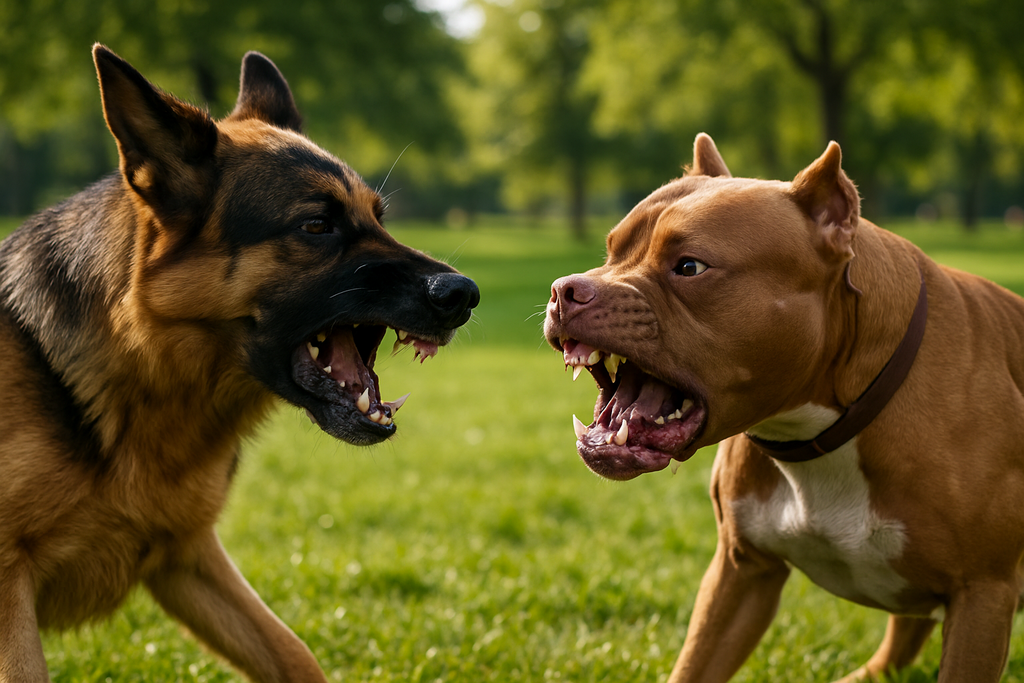
Recognising the warning signs before a dog fight erupts is crucial for prevention. Watch for changes in body language such as raised hackles (the fur standing up along the back), a fixed, hard stare, or a stiff, tense posture.
Other signals include growling, snarling, baring teeth, or freezing suddenly. Dogs may also show signs of stress like pacing, lip licking, yawning, or avoiding eye contact. Tail position can be misleading; a stiff, raised tail or quick, short wags might indicate aggression rather than friendliness.
If you notice any of these signs between dogs, intervene early by removing one dog from the situation before tension escalates into a dog fight.
Dog Fight vs Rough Play: What’s the Difference?
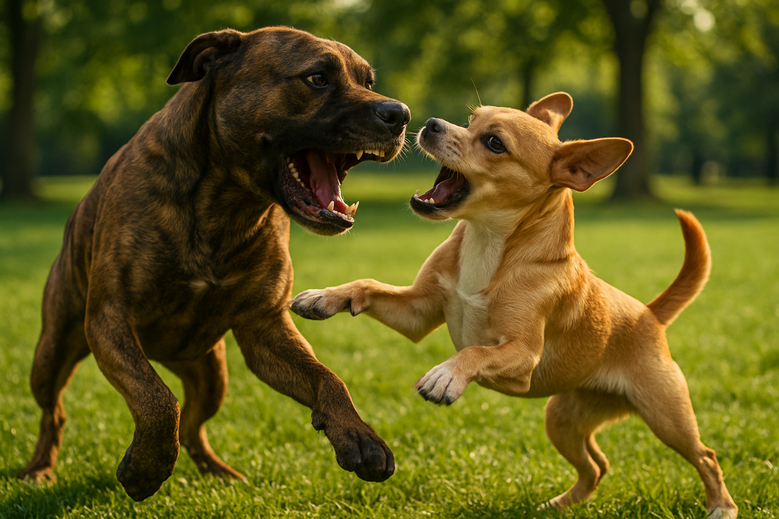
Not all intense interactions between dogs are fights. Dogs often engage in rough play that looks aggressive but is harmless and mutual. To tell the difference between a dog fight and play, observe these key behaviours:
- Playful dogs have relaxed, loose bodies and often start with a play bow (front end lowered, rear end up).
- Their mouths are usually open and relaxed, not tightly closed or snarling.
- Dogs take turns chasing and being “the aggressor.”
- Play is full of exaggerated, bouncy movements.
In contrast, a dog fight involves stiff, tense bodies, fixed stares, and no role-switching. The movements are fast and targeted, often focusing on biting rather than mouthing.
How to Safely Break Up a Dog Fight
If a dog fight does occur, your safety and the safety of the dogs are paramount. Avoid putting your hands or face near the dogs’ mouths to prevent injury.
Here are several safe ways to stop a dog fight:
- Distract the dogs: Loud noises like banging metal objects or blowing an air horn can interrupt their focus. Spraying water with a hose or dumping a bucket of water over the dogs may also help, albeit this would not work with larger dog breeds.
- Use an object as a barrier: Place something solid like a broom, chair, or large piece of plywood between the dogs to separate them without direct contact.
- Wheelbarrow technique (with help): If you have assistance, each person grabs the hind legs of one dog and lifts them so the dog walks on its front legs. Then, walk the dogs backwards away from each other to separate them safely.
Avoid trying to grab or pull the dogs apart by their collars or bodies if you are alone, as this can lead to serious injury.
But prevention is always better than stopping fights! Read our 'Ultimate Obedience Training Guide'!
What to Do After a Dog Fight
Once separated, check both dogs immediately for injuries. Even minor wounds need veterinary assessment to prevent infection or complications.
Give the dogs space to calm down, and avoid forcing interactions immediately after the fight. Monitor their behaviour carefully in the following hours and days.
If fights happen repeatedly, consult a qualified animal behaviourist to address underlying issues and improve future interactions.
Prevention Is the Best Approach
Preventing dog fights is always safer and less stressful than breaking them up. Learn to read your dog’s body language and know their limits. Intervene early at the signs of discomfort or stress.
At doggy daycares and dog parks, staff often assess dogs’ temperaments before allowing group play. In multi-dog households, gradual introductions and supervised interactions help build positive relationships.
Understanding your dog’s personality, managing triggers, and keeping a close watch are key to reducing the risk of dog fights.
Understanding Over Fear
Dog fights are a serious concern for dog owners but understanding why they happen and how to safely stop them can prevent harm. While some breeds may have stronger drives, temperament and environment play a bigger role.
Stay alert to early warning signs, intervene safely, and seek expert help if fights persist. With knowledge and care, most dog fights can be prevented or quickly resolved, ensuring a safer environment for dogs and their owners alike
