
Ultimate Guide on How to Select Best Dog Food for Dogs

How to Select the Best Dog Food — The Ultimate Guide
Your furkid depends on you for nearly everything — from their daily walks to their dinner bowl. Naturally, you want the very best for them, starting with their food. But choosing the right diet can be overwhelming, with countless brands, ingredients, and health claims battling for your attention.
How to select the best dog food isn’t a guessing game; it’s a process that involves understanding your dog’s unique needs, interpreting packaging, and making choices based on knowledge, not marketing. In this ultimate guide, we’ll walk you through everything you need to know, from reading a label to choosing food that supports a long, healthy, and happy life for your furry friend.
Why Your Dog’s Nutrition Matters
Your dog’s diet plays a key role in their overall health and well-being. The food you put in their bowl directly impacts their energy, their ability to maintain a healthy weight, their susceptibility to disease, and even their lifespan. That’s why figuring out how to select the best dog food is a crucial decision for pet owners.
Some dogs have special health conditions — like renal disease, obesity, or food sensitivities — that require specialised diets. Large and small dogs have different nutritional needs, and puppies need more calories and nutrients for proper growth. Whatever your pet’s age, size, or health, choosing their food carefully is a powerful way to care for their future.
Understanding Your Dog’s Individual Needs

How to select the best dog food starts with understanding your dog’s unique profile. Here are a few key factors to consider:
Activity level:
A highly energetic, working, or sporting dog will need more calories and a diet rich in proteins and healthy fats. A less-active or sedentary dog might require a calorie-controlled diet to avoid gaining excess weight.
Size and breed:
Small, medium, and large dogs have different metabolic rates and growth patterns. Large-breed puppies, for example, need a careful balance of calcium and phosphorus to avoid abnormal growth, while tiny dogs may need more calories per pound of body weight.
Life stage:
Puppies, adults, and seniors all have different nutritional requirements. A growing puppy needs a diet rich in proteins and calories; an adult might require maintenance levels; and a senior might benefit from a diet lower in calories but rich in joint-support nutrients.
Health conditions:
Some health issues — from joint to dental problems — may require specialised diet formulas. Always check with your veterinarian if you suspect your dog has health issues that diet may affect.
Decoding Pet Food Labels

How to select the best dog food involves understanding what’s on the label. The packaging contains valuable information — if you know how to interpret it.
But first, you’ll need to know what AAFCO and NRC are, how they’re different and why it matters.
AAFCO vs NRC: What’s the Difference and Why It Matters
When choosing the best dog food for dogs, you’ll often hear about AAFCO and NRC standards. But what do these terms mean, and how do they affect your dog’s nutrition?
AAFCO (Association of American Feed Control Officials) sets the nutritional guidelines that most commercial pet food brands follow. If a label says the product is “Complete and Balanced” or “Formulated to meet AAFCO standards,” it means the food meets the minimum nutrient levels for your dog’s life stage. However, AAFCO doesn’t test the food itself. Instead, they rely on manufacturers to follow these guidelines, either through nutrient formulation or short-term feeding trials.
On the other hand, the NRC (National Research Council) publishes scientific reports on nutrient requirements for animals, including dogs. These reports are more in-depth and research-based, focusing on nutrient bioavailability and digestibility. But the most recent edition was published in 2006 and was partially funded by industry players, including the FDA and Pet Food Institute, raising some concerns about potential bias. Additionally, some of the data used was based on processed ingredients rather than fresh, whole foods.
In short:
- AAFCO is more widely used in the pet food industry and provides easy-to-spot statements on labels
- NRC offers more detailed scientific insights but is less commonly referenced on packaging.
Both have their merits, but when selecting kibble, it's useful to check if the food meets AAFCO guidelines, especially for general feeding. For pet owners exploring home-prepared or alternative diets, NRC standards may provide a more technical foundation (ideally with guidance from a vet or nutritionist).
Guaranteed Analysis:
This shows minimum percentages of proteins and fats and maximum percentages of fibre and moisture. It’s not a perfect snapshot of nutrients — just a baseline — and it shouldn’t be your only consideration.
Ingredients:
The first few ingredients make up the majority of the food by weight. Ideally, a high-protein ingredient (such as chicken or fish) should come first.
Additives and Fillers:
Some ingredients — from by-products to plant components — may alarm you, but many serve a purpose, adding flavour, texture, energy, or essential nutrients.
Licks & Bites: NRC-Guided Nutrition for Your Dog

For pet parents looking to go beyond commercial standards, Licks & Bites offers a thoughtfully formulated option guided by NRC (National Research Council) nutritional requirements. Unlike most mainstream kibble brands that follow AAFCO’s minimum standards, Licks & Bites focuses on scientifically backed nutrient profiles based on the bioavailability and digestibility of real ingredients.
This approach aims to mirror what dogs need from a biological and nutritional standpoint, rather than simply meeting the baseline. Licks & Bites prioritises quality ingredients and carefully balanced recipes that align with NRC data, offering a more holistic alternative for dogs at various life stages.
If you’re seeking dog food grounded in nutritional science, this is a brand worth exploring.
How Much Should I Feed My Dog?
How to select the best dog food isn’t just about choosing a brand — it’s also about figuring out the proper amount to feed. The amount you serve depends on your dog’s age, activity level, and health. Packaging instructions can be a helpful starting point, but your veterinarian can provide a tailored amount for your pet.
Some pet parents overestimate their dogs’ calorie needs, adding to the growing problem of obesity in pets. To avoid overfeeding, measure your pet’s food carefully instead of guessing, and adjust based on their activity and condition. Ideally, you want your dog to maintain a healthy weight, not overweight and not underweight.
Using a body condition scoring chart, you can assess whether your dog falls into the ideal range. Ideally, you should be able to feel their ribs under a thin layer of flesh and view a slight waistline when looking from above.
Puppy-Specific Nutrition Needs
How to select the best dog food for a puppy is a unique consideration. Large- and giant-breed puppies have different growth patterns and requirements from small and medium puppies. Furthermore, tiny puppies — like Toy or Small breeds — need more calories per pound to keep their energy up and their blood sugar stable.
Higher calorie and protein content:
Puppy food typically contains more calories and protein to aid growth and development.
Calcium and phosphorus:
For large- and giant-breed puppies, these nutrients must be carefully balanced to avoid abnormalities in bone and joint development.
Small-breed consideration:
Small and Toy puppies may be prone to low blood sugar if not fed frequently, so choosing a food designed for their tiny mouths and faster metabolism can help keep their energy levels stable.
As your puppy grows, their nutritional requirements will diminish, and you should gradually transition them to adult food once they reach maturity, typically at 9-12 months for small and medium dogs and 18-24 months for large and giant breeds.
The Grain-free Debate
How to select the best dog food often involves navigating myths and controversies, and the “grain-free” debate is a perfect example.
Some pet parents opt for grain-free food due to health worries, but many veterinary experts say there’s no universal health benefit to avoiding grains in a dog’s diet. Certain cases of dilated cardiomyopathy (heart disease) have been investigated in dogs fed large amounts of non-soy legumes — ingredients often found in grain-free food — although the causation isn’t entirely clear.
The key is choosing a diet that’s complete, balanced, and appropriate for your pet. If your dog has a true allergy to a particular grain — which is quite rare — a grain-free diet might be recommended. Otherwise, there’s nothing inherently harmful about grains in a well-formulated diet.
Special Diets for Special Needs
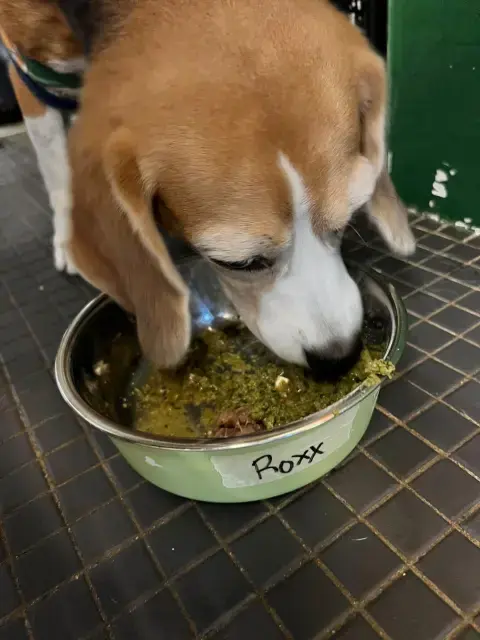
When thinking about how to select the best dog food, it’s important to remember that not all dogs have the same dietary needs. Some may require specialised nutrition due to health conditions such as kidney disease, liver issues or gastrointestinal sensitivities. In these cases, standard kibble might not be enough.
Therapeutic diets can be formulated to support specific conditions, such as:
- Renal or liver support
- Weight management
- Joint health and mobility
- Digestive issues like IBS or IBD
- Pancreatitis recovery
- Cancer support and immune health
- Neurological conditions such as epilepsy
Licks and Bites’ LAB+ offer customisable dog food solutions tailored to these medical needs, developed with nutritional care and precision in mind. These diets are crafted to target specific health concerns while ensuring your dog still receives balanced, essential nutrients.
Before starting your dog on any therapeutic diet, it’s crucial to consult your veterinarian to determine the right formulation and feeding approach based on your dog’s individual condition and life stage.
Pet Food Recalls and Industry Regulations
How to select the best dog food also means staying informed about recalls and industry standards.
Pet food recalls can affect large and small companies alike and are typically issued when a health hazard, contamination, or mislabeling is identified.
Ultimately, choosing a food manufactured by a reputable company with rigorous testing and sourcing controls reduces the likelihood of problems. Brands that employ veterinary nutrition experts, follow AAFCO guidelines, and voluntarily submit their products for testing can be a safer bet.
Final Thoughts
How to select the best dog food may seem challenging at first, but with knowledge and careful consideration, you can make a choice that supports your pet’s health and happiness.
Start by understanding your dog’s unique needs — age, size, activity, and health — and then match those needs to food that meets AAFCO or NRC standards, is made by a reputable manufacturer, and contains ingredients you feel comfortable feeding.
It’s not about choosing the most expensive or the most popular; it’s about choosing a diet that your furry friend will thrive on.
If you’re unsure, your veterinarian is a valuable ally. They know your pet’s health history and can guide you toward a diet that suits their specific requirements.
Ultimately, choosing the best food for your dog is a loving decision; when you do it well, you’re investing in their future happiness, health, and longevity.
